
Now Available for Pre-Order!
Let There Be Play: A Classical Guide to Joyful Discovery

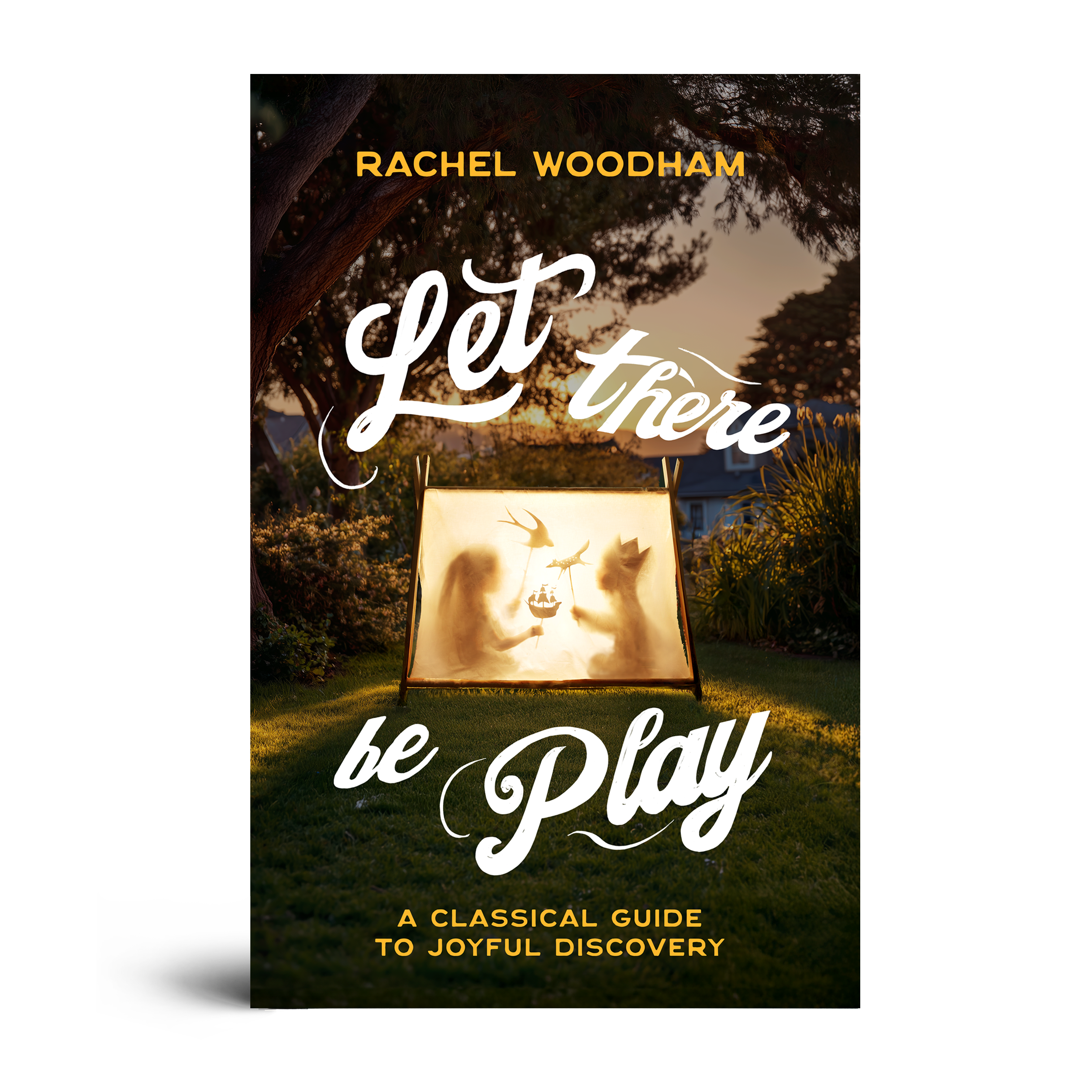
Throughout my years in the classical renewal, I have known something was off. In the beginning, ignorant and with an impoverished understanding of classical education, most everything was. Of course, with an infant at home and soon another on the way, I barely had time to open a book. Eventually, through the years, my soul’s capacity to receive the riches of the classical Christian tradition grew. I read voraciously and began to develop a robust educational philosophy.
Still, something was missing. I quit my job and began to homeschool my children. I crawled my way through a Great Books graduate program. Over time, I began to see the problem: putting old content into a new model. The new model assumes an inherently disintegrated vision of our humanity and of the reality in which we live. It became clear to me that imagination is the key: Through it, we develop morally and know poetically. It is the organ of meaning. I just didn’t know how it all worked.
In the summer of 2022, I began a desperate hunt for the book that would weave all the threads into a coherent tapestry, explaining how the imaginative moral, spiritual, and intellectual formation could be applied across the curriculum. Most everything that I found was about the moral imagination. Though vital, I was convinced that our imaginative moral formation is not limited to literature. What about the rest of the curriculum? That summer, I never found the book with the answers. I did, however, follow these threads down the pathway to play.
Why play? We often think of play as a particular set of games or activities, or, worse, as a way to waste time when the “real” stuff of life is, for a moment, set aside. Yet play is not an action but a disposition, a disposition that results in joyful discovery. It is not the content but the form. This means that both our work and our rest can be (and at their best are) play. Inherently imaginative, play reintegrates us both within ourselves and to reality around us, growing us morally, intellectually, and spiritually.
This summer, I present to you the book that I could not find: Let There Be Play: A Classical Guide to Joyful Discovery is now available for pre-order from CiRCE Institute. In the forward, Heidi White writes:
Let There Be Play is for those who sense that something is not quite right, even in the best educational settings, and who are searching for a more coherent vision. It is for teachers who want their students not only to perform well but to become good, for parents who desire more than checklists and outcomes, and for anyone who believes that education should be ordered toward Truth, Goodness, Beauty—and joy.
Ultimately, this book is an invitation. It invites the reader to reconsider what it means to learn, what it means to be formed, and what it means to be human. And it proposes, with both conviction and hope, that the recovery of play is not a peripheral concern, but a necessary step in the renewal of education itself.
This two-part book is a guide to the philosophy and the practice of play, written for a diverse audience of parents, teachers, and administrators desiring the missing piece—fullness through joyful discovery. In the Philosophy of Play, I welcome the novice and the veteran, offering creative insight without presupposing philosophical knowledge. In the Practice of Play, I include ideas and resources for the classroom and home school, for students old and young. These ideas are drawn not only from my own experience but from conversations with teachers and leaders in the classical renewal.
I invite you to join me this summer in a conversation, considering a life of joyful discovery. Let There Be Play is currently available at a discounted pre-order price (shipping included!). Pre-orders are especially vital for independent publishers and new authors, so your early support matters.
Stay tuned for more posts about play in the months to come. Want to read more now?
The article that started it all: “Their Work is Their Play”
My last Substack post: “The Opposite of Play is Despair”
My interview series on play at CiRCE Institute: The Still Point